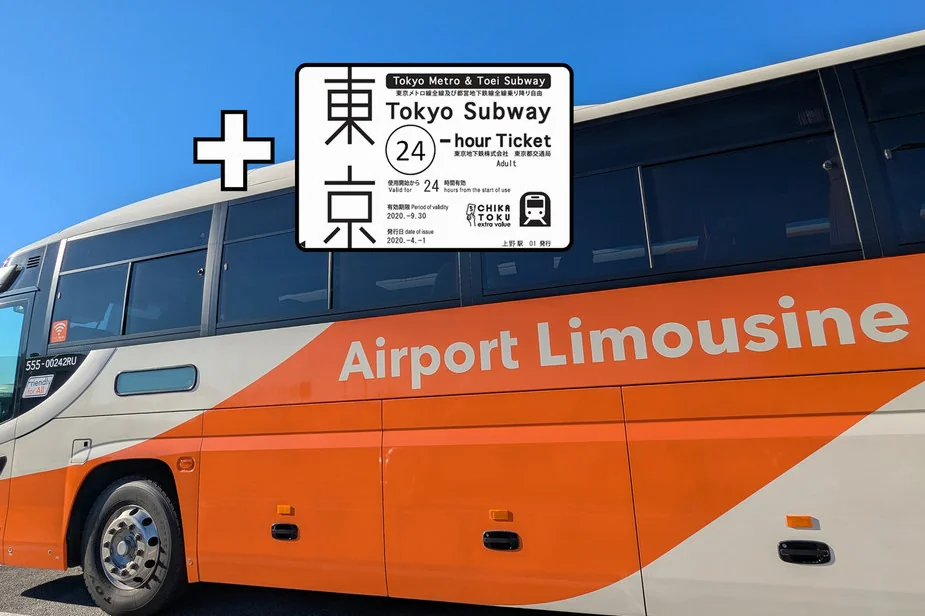
During my last business trip to Tokyo, I tracked every yen spent on my Excel travel ledger to see if the Narita Airport Limousine + Tokyo Subway Pass (24/48/72-hour) Set actually lived up to the hype. The data was clear: this combo ticket package is the most efficient way to balance city center accessibility with a strict Tokyo independent travel budget. Especially with the current yen exchange rate calculation making every saving count, bundling your airport transfer with unlimited inner-city transit is a logical move for any meticulous planner.
Cost-Benefit Analysis: Saving Tokyo Transportation Costs
The Narita Airport Limousine + Tokyo Subway Pass (24/48/72-hour) Set typically saves travelers between 15% and 20% compared to purchasing a bus ticket and a subway pass separately. This combo ticket package is particularly valuable for those staying near major hubs like the Shinjuku Limousine Stop or the Tokyo Station Limousine Bus area, where direct bus access eliminates the need for expensive taxi transfers.
| Ticket Type | Individual Price (JPY) | Combo Set Price (JPY) | Total Savings |
|---|---|---|---|
| Limousine Bus + 24h Pass | 3,900 | 3,400 | 500 JPY |
| Limousine Bus + 48h Pass | 4,300 | 3,700 | 600 JPY |
| Limousine Bus + 72h Pass | 4,600 | 3,900 | 700 JPY |
In my experience, the Tokyo Subway Pass 72-hour version offers the highest utility. If you use the subway just four times a day, the per-ride cost drops significantly below the standard fare of 180-220 JPY. I recorded 19 rides over three days, which would have cost me 3,800 JPY on a standard IC card like Suica or Pasmo, but cost effectively nothing extra after the initial package price.
Keisei Skyliner Comparison and Narita Express N'EX
While the Keisei Skyliner is faster for reaching Ueno and the Narita Express N'EX is convenient for JR Pass holders, the Narita Airport Limousine Bus wins on comfort and luggage handling for specific districts. For travelers staying in Ginza, Roppongi, or Shinjuku, the bus drops you much closer to your hotel lobby than the sprawling underground train stations.
"The limousine bus is often overlooked by speed-seekers, but for those with heavy bags, the door-to-door service to major hotels is an underrated luxury in a city as complex as Tokyo."
However, honesty is key: the bus is vulnerable to traffic. During my trip last October, a minor accident on the Shuto Expressway added 22 minutes to my arrival time. If you have a tight meeting schedule, the train is more predictable, but for a leisure-focused Tokyo 3-night 4-day itinerary, the bus is far more relaxing.
Exchanging Your QR Code Voucher
To use the package, you must present your QR code voucher exchange at the dedicated limousine bus ticket counters located in Narita Airport Terminal 1 or Terminal 2. The staff will provide you with a physical bus boarding pass for a specific time and a magnetic Tokyo Subway Pass that activates upon its first use at a station gate.
I arrived at Terminal 2 at 9:15 AM and was the third person in line. The process took exactly 4 minutes. Note that you cannot use the QR code directly on the bus; you must get the paper ticket from the counter first. The bus also offers a free Wi-Fi service, though I found the speeds were only sufficient for messaging and light browsing, not for streaming video.
Checked Baggage Regulations and Onboard Comfort
The Narita Airport Limousine Bus allows for two pieces of checked baggage per person, with a weight limit of 30kg each. This is a significant advantage over the limited overhead space on local trains and even some limited express trains where luggage racks fill up quickly.
The seats are arranged in a 2-2 configuration and feature more legroom than a standard economy flight. I found the air conditioning to be quite strong, so keeping a light jacket handy is a pro tip I always share with my colleagues. The Limousine Bus Timetable is generally reliable, with departures every 15 to 30 minutes for major routes.
Maximizing the Tokyo Subway Pass 72-hour

To get the most out of your 72-hour pass, you should focus your sightseeing on areas served by the 13 lines of the Tokyo Metro and Toei Subway. This covers almost every major tourist spot, including Asakusa, Shibuya, and Ginza, but excludes the JR Yamanote line.
When performing an IC card Suica Pasmo comparison, remember that the subway pass is strictly for the metro. If you plan to visit Odaiba or suburban areas like Mitaka (Ghibli Museum), you will still need a small balance on a Suica card. Here is a budget-friendly 3-day plan:
- Day 1: Arrival at Narita, bus to Shinjuku, evening in Omoide Yokocho (Subway: Shinjuku Line).
- Day 2: Morning at Senso-ji, afternoon in Akihabara, evening in Ginza (Subway: Ginza & Hibiya Lines).
- Day 3: Meiji Jingu, Harajuku exploration, and Roppongi Hills night view (Subway: Chiyoda & Oedo Lines).
Tokyo Accommodation Location Recommendation
For those using this combo, I suggest staying in Shinjuku, Nihonbashi, or near Tokyo Station to minimize walking distances from the bus stops. These areas are central hubs for the unlimited Tokyo Metro and Toei Lines, ensuring you never have to transfer more than once to reach your destination.
I personally stayed at a business hotel in Kayabacho during my last trip. It was a 5-minute walk from the T-CAT (Tokyo City Air Terminal) bus stop and sat right on the Hibiya and Tozai lines. This strategic location allowed me to keep my daily transit time under 40 minutes while hitting six different districts in two days.
Frequently Asked Questions (FAQ)
Can I buy this at the airport without a reservation?
While possible, prices are usually higher at the counter. Booking via MyRealTrip or Klook discount links ensures you get the package rate.
Does the subway pass work on JR lines?
No, it is only for Tokyo Metro and Toei Subway lines. For JR lines like the Yamanote, you need an IC card or a separate ticket.
What is the validity and usage instructions for the pass?
The subway pass is valid for 24, 48, or 72 consecutive hours from the moment you first insert it into a ticket gate, not by calendar days.
if you value a seat and professional luggage handling after a long flight, the Narita Airport Limousine and Subway Pass combo is a top-tier choice. It simplifies the logistics of your first few hours in Japan while providing a pre-paid solution for getting around the city. Just be sure to check the traffic reports if you are heading back to the airport during peak hours.