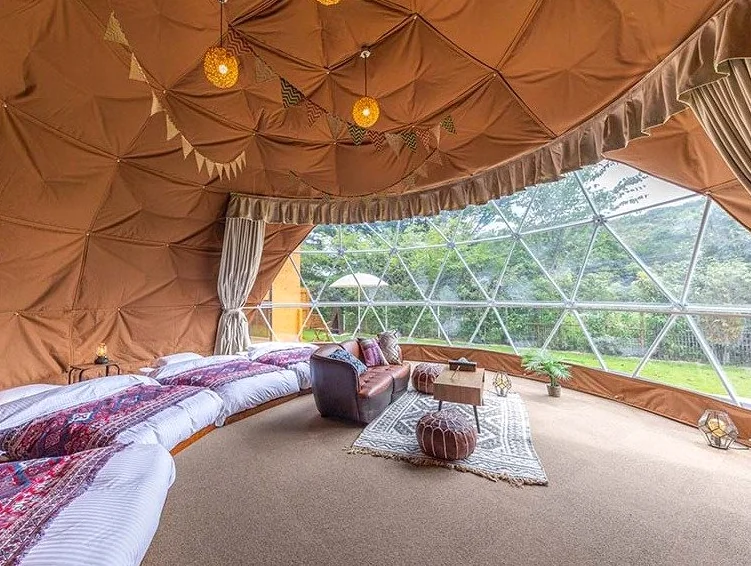
When I updated my cost per night spreadsheet for my latest Seto Inland Sea itinerary, standard business hotels were averaging ¥9,500 per night for a space barely large enough to open a suitcase. I usually accept this as the baseline for Japan on a budget. However, I recently tracked the expenses for a stay at GLAMP ENTRANCE HIROSHIMA-MIHARA, and the math completely upended my usual accommodation strategy. Set against the green mountains of the region, this property features white dome tents arranged on a grass field, each equipped with a private wooden deck. It looks like a luxury resort, but when you split the cost among a group, it competes directly with basic Mihara City hotel deals. I spent two nights testing the logistics, transit routes, and hidden fees to see if this setup actually makes financial sense for thrifty travel. Here are the exact numbers, the genuine downsides, and the workarounds I found.
How much does a night at this glamping site actually cost?
A standard night at this facility typically ranges from ¥15,000 to ¥25,000 ($100-$165) for the entire dome, depending on the day of the week. When divided by the maximum dome tent capacity of four people, the base rate drops to an incredibly efficient ¥3,750 per person. [1]
To get these numbers, you have to be strategic about your dates. Off-peak travel savings are substantial here. A Tuesday night in November cost me exactly ¥15,400. If you try to book during the Obon festival or Golden Week, a massive peak season surcharge kicks in, pushing rates past ¥35,000. At that price point, the value proposition vanishes. You also need to account for the mandatory Hiroshima Prefecture tourism tax, which adds ¥200 per person per night at checkout.
The spacious interior easily accommodates groups, making it an optimal choice for splitting costs. At night, the starry sky over the domes provides a premium aesthetic for roughly ¥25,000 ($165) per night on weekends, which is highly competitive for budget glamping Hiroshima style.
Booking Platform Price Comparison
Rates fluctuate heavily depending on the platform, and direct bookings rarely offer the lowest baseline price. I cross-referenced three major apps over a two-week tracking period to find the actual floor price.
| Booking Platform | Observed Weekday Rate | Applied Discount Strategy |
|---|---|---|
| Agoda | ¥15,800 | Agoda VIP discounts applied at checkout |
| Booking.com | ¥16,200 | Booking.com mobile-only rates via app |
| Rakuten Travel | ¥15,500 | Rakuten Travel price comparison with points |
Always check the cancellation policy terms before locking in these lower rates. The absolute cheapest tiers are often non-refundable 14 days out. Additionally, with the current JPY to KRW exchange rate and the strong US dollar, international visitors are getting an automatic 15-20% discount compared to historical averages, making this an ideal time to book.
Is the transit worth the accommodation savings?
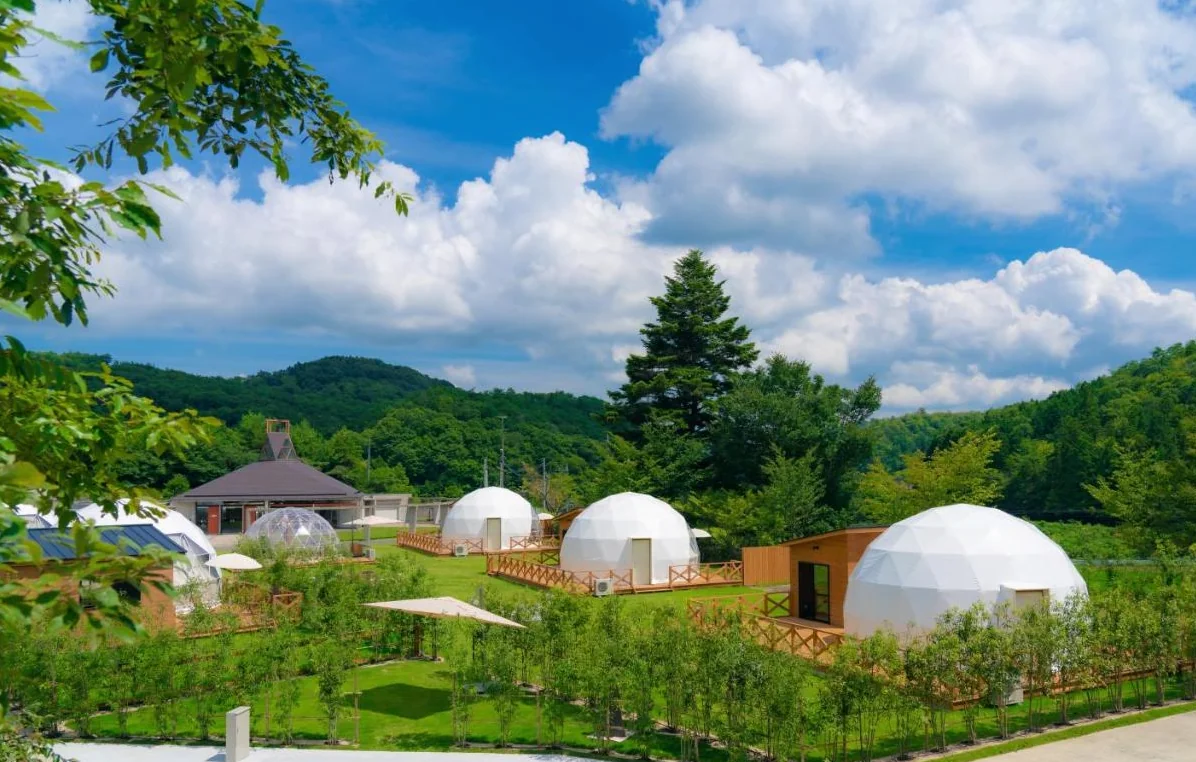
Getting to the site requires balancing transit time against your budget, as the property sits away from major rail lines. You will spend around ¥1,500 on local transit or roughly ¥6,000 per day if you opt for a vehicle.
If you score Hiroshima LCC flight deals, you will land at an airport that is geographically close but practically annoying to navigate from. Here is the breakdown of the rental car vs. public transit cost:
- Public Transit Route: Take the Hiroshima-Mihara limousine bus from the airport to the city center (¥1,200), then navigate local buses. JR Mihara Station accessibility is decent for regional trains, but you still need a ¥350 local bus to reach the actual glamping grounds.
- Driving Route: A basic compact car from the airport costs about ¥5,800 per day. If you are a group of three or four, the car pays for itself by eliminating bus fares and saving you two hours of waiting time.
- Regional Rail: If you are coming from Osaka, Sanyo Shinkansen fares to Mihara Station will run you about ¥8,450 one-way unreserved.
One major downside of the remote location is the self check-in process. It relies on a tablet at the entrance, and the interface was incredibly slow to scan my passport. Have your booking reference number screenshotted beforehand, as the cellular signal in the mountains can drop unexpectedly.
Food Logistics and Hidden Expenses
Relying on the property's catering will quickly destroy your cheap travel goals, as their dinner packages carry a heavy premium. You can save over 60% by purchasing your own supplies locally before arriving at the site.
The official BBQ meal set ¥ prices are steep—often quoted around ¥7,500 to ¥8,000 per person for meat and vegetables. This is where basic travel hacks come in. I rented the grill space for a flat fee and hit the local AEON mall beforehand. Leveraging local Mihara supermarket prices, I bought premium domestic beef, local vegetables, and drinks for just ¥3,200 per person.
"Based on information from Trip.com listings, guests have access to individual wooden decks with outdoor dining setups, making self-catering the most cost-effective dining strategy." [1] Another logistical hurdle is laundry. While standard business hotels have banks of washers, the coin-operated laundry facilities here are highly limited. I had to wait 45 minutes for a machine to free up. If you are on a long itinerary, do your laundry before checking in here.
The Honest Reality of the Dome Tents
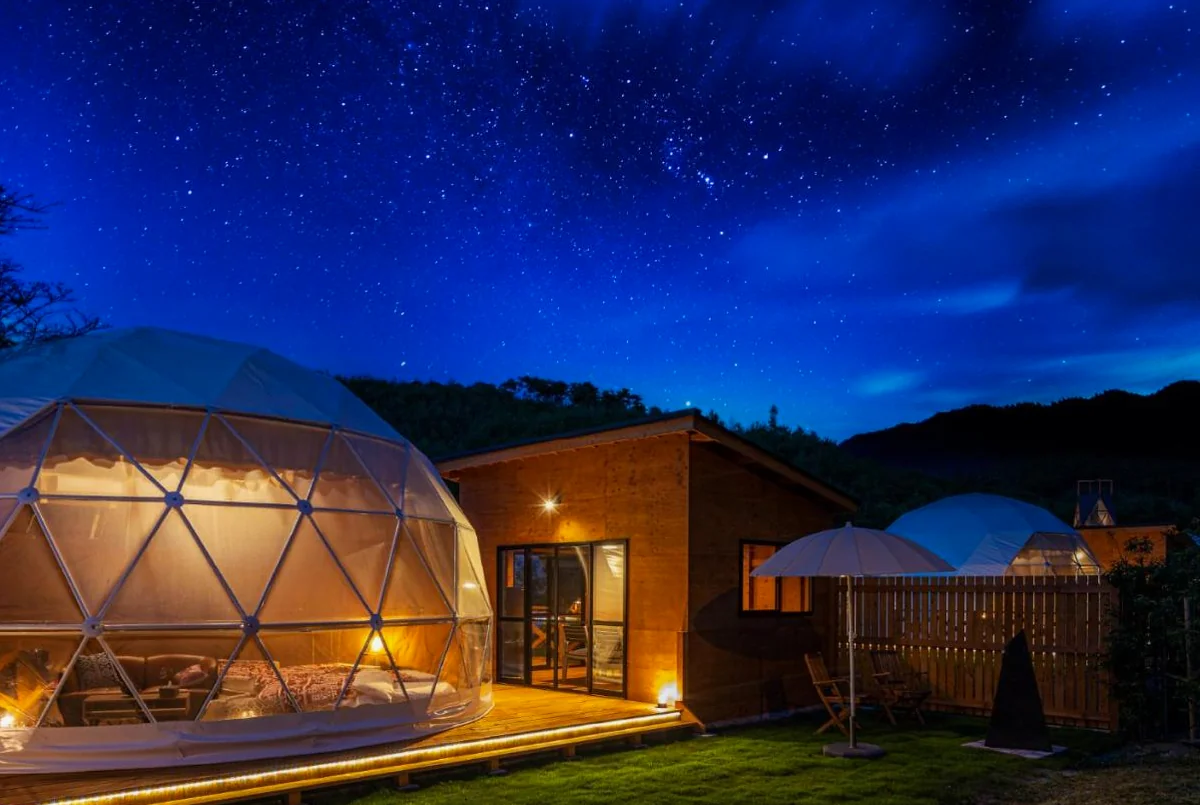
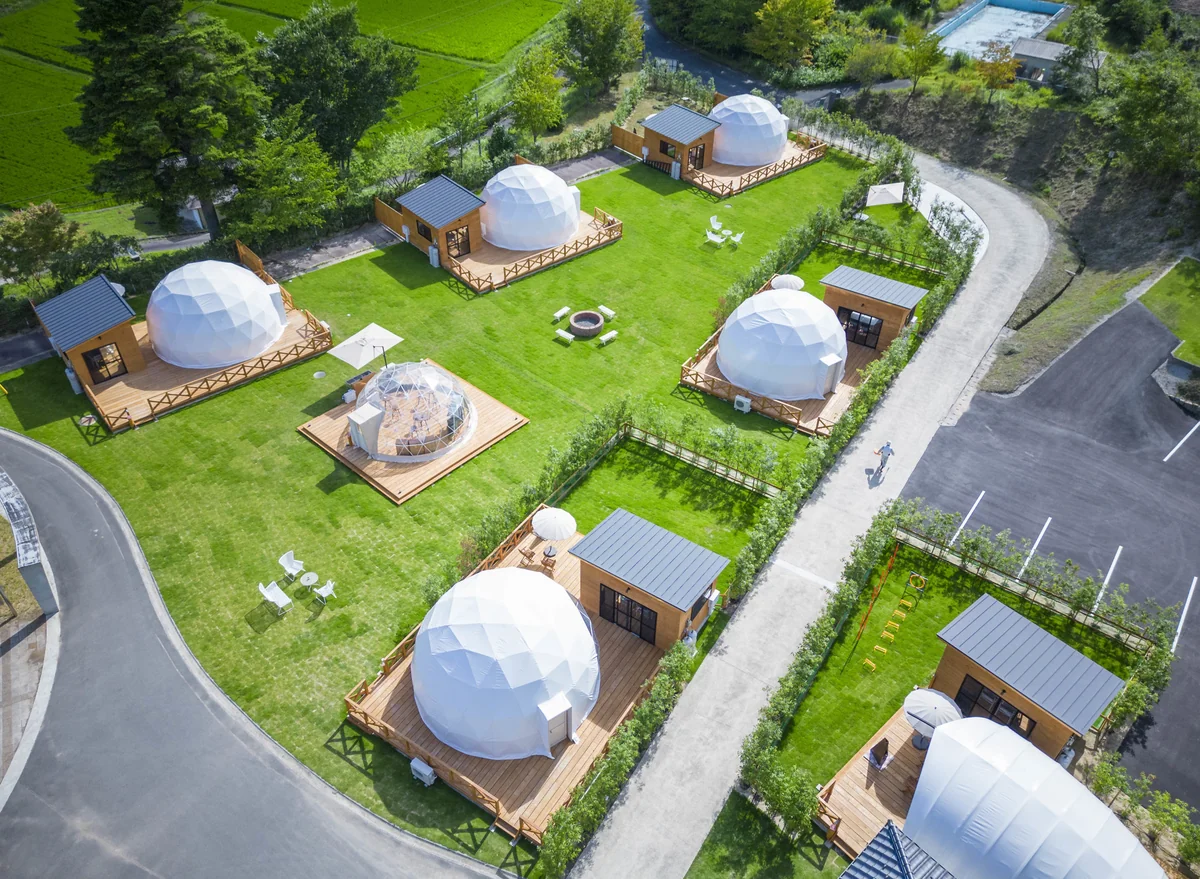
The facilities offer excellent value for the price, but the high density of the property means privacy is somewhat compromised. You get luxury aesthetics for a fraction of the typical cost, provided you tolerate being relatively close to your neighbors.
The site density is quite high. You will hear the group in the next dome if they stay up late talking on their deck. I brought silicone earplugs, which completely solved the problem, but it is something to note if you expect total wilderness isolation. The climate control inside the dome is excellent, handling the chilly mountain evening without issue.
Who Should Actually Book This?
This property is ideal for groups of three to four travelers who want an outdoor aesthetic without paying luxury resort prices. Solo travelers or couples might find better financial value sticking to traditional city hotels.
If you are traveling alone, the ¥15,000 base rate is too high to justify for budget travel. But for a family or a group of friends willing to buy their own groceries and split the dome, it drops to under ¥4,000 per head. At that price, it absolutely crushes any standard hotel offering in the prefecture.
Frequently Asked Questions
 Q: Do I need to bring my own sleeping bags or camping gear?
A: No. The domes function exactly like hotel rooms, complete with standard beds, clean linens, and climate control. You only need to bring your personal toiletries and food.
Q: Is it cheaper to book the meal plan or buy food locally?
A: Buying food locally is significantly cheaper. Supermarket supplies cost me around ¥3,200 per person, compared to the ¥8,000 on-site BBQ packages.
Q: How reliable is the Wi-Fi in the domes?
A: It is sufficient for basic messaging and checking train schedules, but I experienced drops when trying to stream video. Download your entertainment beforehand.
If you have a group heading to the Seto Inland Sea area, skip the cramped city rooms. Rent a compact car, load up on supermarket wagyu, and split one of these domes. Run the numbers yourself—it is one of the most efficient ways to experience the Japanese countryside without draining your wallet. What's your target cost-per-night when traveling in Japan? Let me know your limits in the comments.