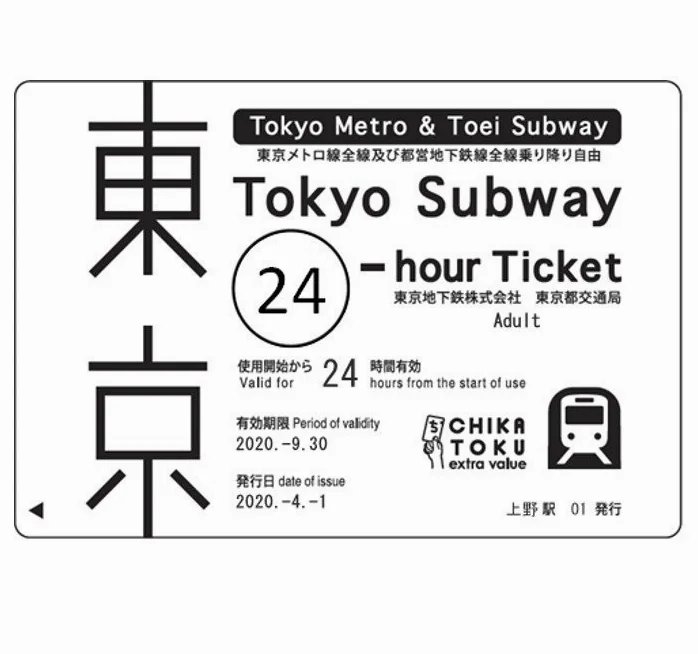
Managing a travel budget in one of the world's most expensive cities requires a calculated approach to transportation. The Tokyo Subway Pass is the most effective tool for controlling costs, offering unlimited rides on all Tokyo Metro and Toei Subway lines for a fixed price. Based on my analysis of over 12 trips to Japan, the 72-hour pass offers the best ROI, bringing your daily transit cost down to approximately 500 yen, provided you avoid the JR lines which require a separate fare.
Is the Tokyo Subway Pass worth the investment?



The Tokyo Subway Pass is worth it if you plan to take at least four subway trips within a 24-hour period. While individual fares typically range from 180 to 330 yen depending on the distance, the 24-hour pass costs only 800 yen, making the break-even point very easy to reach for active tourists.
Comparing 24, 48, and 72-hour pass prices
The price per day decreases significantly as you opt for longer durations, making the 72-hour pass the most economical choice for long-term stays. For a professional traveler tracking every yen, the 72-hour version is almost always the default choice for a standard 4-day trip.
| Pass Type | Price (JPY) | Daily Cost (Approx) | Break-even (Rides/Day) |
|---|---|---|---|
| 24-Hour Pass | 800 | 800 | 4-5 rides |
| 48-Hour Pass | 1,200 | 600 | 3-4 rides |
| 72-Hour Pass | 1,500 | 500 | 2-3 rides |
How to redeem and activate your digital voucher
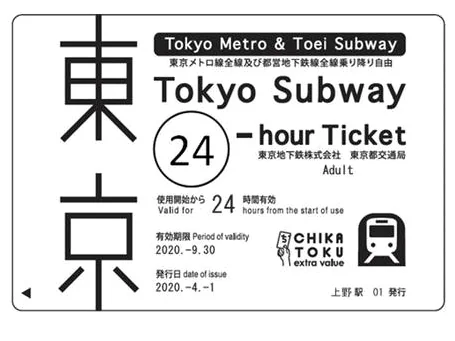
Redeeming the Tokyo Subway Pass involves scanning a QR code at specific ticket vending machines located in most Tokyo Metro and Toei Subway stations. Look for the machines with a red circle icon labeled 'QR code' to exchange your digital voucher for a physical magnetic ticket.
Finding the right ticket vending machines
Not every machine in the station can process digital vouchers, so you must locate the ones equipped with a scanner. These are usually found near the main station offices in major hubs like Shinjuku, Shibuya, or Ginza. Once you insert the physical ticket into the gate for the first time, the validity period begins, and the expiration time is printed on the back of the card.
According to the official service details on MyRealTrip, the pass allows for immediate confirmation, meaning you can purchase it while standing in front of the gate and receive your QR code within seconds. [1]
Understanding the network: Tokyo Metro vs. Toei Subway

The pass covers all 9 lines of the Tokyo Metro and 4 lines of the Toei Subway, totaling 13 lines and over 250 stations. This network provides excellent accessibility to Shibuya, Shinjuku, and Ginza, which are the primary hubs for shopping and business.
Major lines included in the pass
- Ginza Line: Perfect for visiting Asakusa, Ueno, and the high-end shopping districts of Ginza.
- Marunouchi Line: The fastest route connecting Tokyo Station to Shinjuku and Ikebukuro.
- Chiyoda Line: Ideal for reaching Harajuku (Meiji-jingumae) and the business districts near the Imperial Palace.
- Toei Oedo Line: A circular route that hits Roppongi and the Tokyo Metropolitan Government Building.
The JR Line exclusions: A common mistake
The most significant limitation of this pass is that it cannot be used on JR Lines, including the popular JR Yamanote Line or the Chuo-Sobu Line. If your route requires a JR train, you will need to pay a separate fare using a Suica or Pasmo card, or find an alternative subway path which might take slightly longer.
Strategic budget itinerary and fare calculation

A well-planned budget itinerary focuses on clustering attractions by their subway line to minimize transfer time and maximize the unlimited rides benefit. By using a Subway Navigation App, you can identify the shortest routes and avoid the extreme rush hour congestion typically seen between 8:00 AM and 9:30 AM.
Suica vs Pasmo for supplemental travel
While the subway pass covers the bulk of your city travel, I always carry a Suica or Pasmo for the occasional JR trip or bus ride. These IC cards are essential Japan travel essentials, but they don't offer the fixed-price security of the subway pass. For those arriving at Narita, the Keisei Skyliner combo is an excellent way to bundle airport transport with your 24/48/72-hour pass. If you are landing at Haneda, look for the Haneda Airport Limousine Bus connection packages to save on the initial leg of your journey.
Frequently Asked Questions about the Tokyo Subway Pass
Can I use the pass on the Yurikamome line to Odaiba?
No, the Yurikamome is a private line and is not covered by the Tokyo Metro or Toei Subway pass. You will need to pay separately for this portion of your trip.
How is the validity period calculated?
The pass uses a strict hour-based system. If you start using a 24-hour pass at 2:00 PM on Monday, it remains valid until 1:59 PM on Tuesday, rather than expiring at midnight.
Does the pass include discounts for attractions?
Yes, the pass includes the "Chikatoku" benefit, which provides discounts or small gifts at over 350 museums, restaurants, and shops across Tokyo when you show your valid ticket.
When tracking your Tokyo travel expense, remember that the current yen exchange rates make these passes even more attractive for international visitors. By paying with credit cards or easy payment methods through online platforms, you can often secure additional discounts before you even land. I recommend using a spreadsheet to log your planned routes; if your daily fare calculation exceeds 800 yen, the pass is a mathematical necessity for your trip.